7.
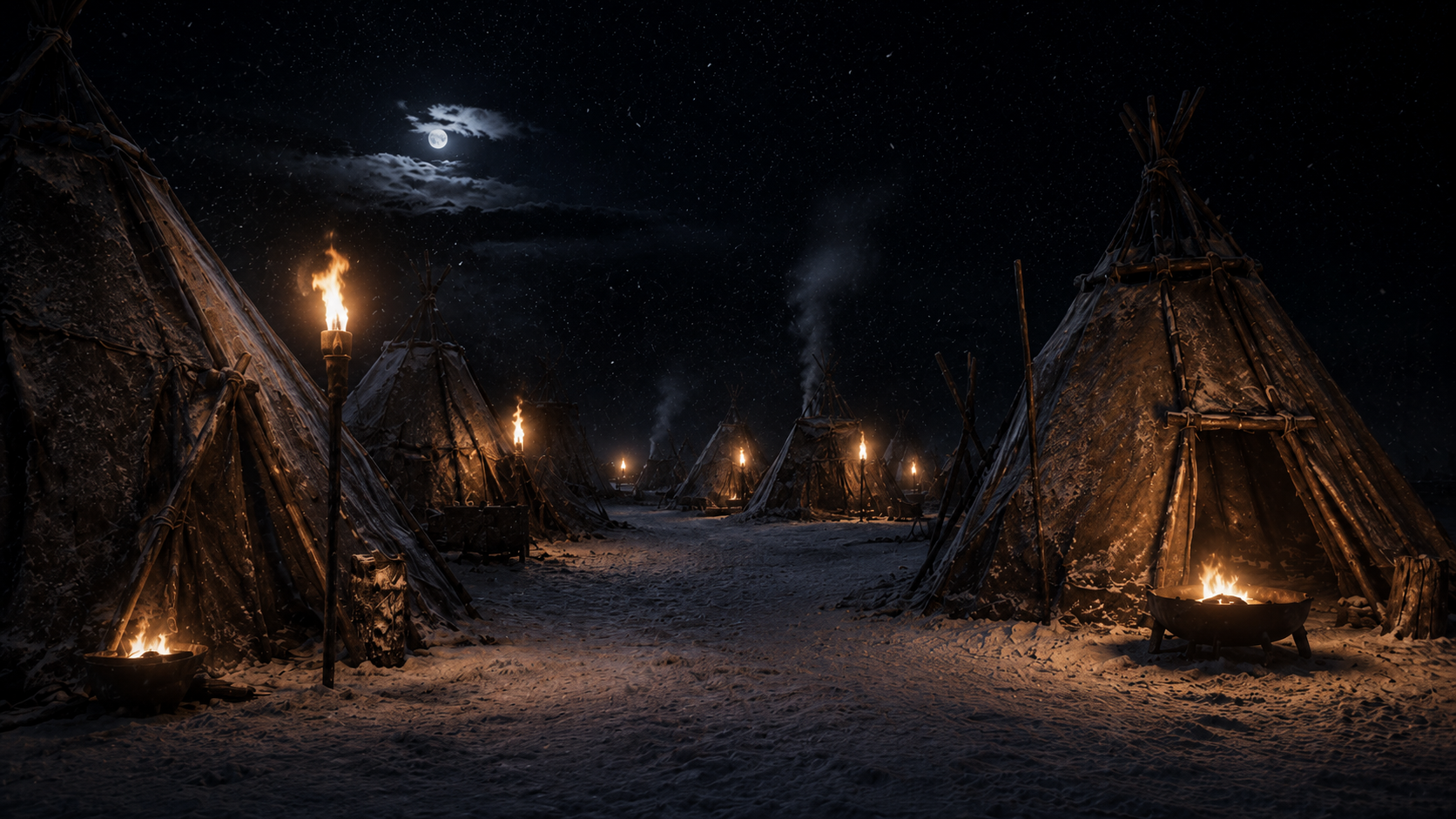
When Yul lies down this night on his furs, every small sound in the dark pulls him back from the edge of sleep. He turns onto one side, then the other. How many times has the Šaman put him off these past weeks, telling him to be patient? But now she has gone west. His hands clench at the thought of touching the envelope, of tearing it open and reading the words that would finally let him breathe again. He only wants to know if Amber’s all right.
Outside, the east wind howls.
He thinks of his father. How will he react when his only son leaves the tribe? Yul knows the answer. The great Bartagai’s pride will be wounded, and he’ll turn from him for good. There’s relief in that thought.
But then a familiar voice whispers, like the wind outside: what if his mother gets well and comes back to him? He rolls onto his side, pressing his eyes shut. That he can still hope after all these years feels like a curse.
He clenches his hands into fists. He has given that voice a place in his head for too long. He just has to stop listening. Let it starve—until one day it’s nothing but a pale shape in his memory. Like his mother’s face. She will not come back to him. Shani understood that.
Softly, he brushes the furs aside and sits up. He reaches under his bedding and pulls out the bundle. His eyes skim through the letters—Amber’s letters. Creased pages with worn edges. Amber’s earliest lines were clumsy, the simple words of a child. He turns page after page. The writing grows cleaner, the words more precise. He remembers his own handwriting changing—the Šaman’s teaching slowly showing in the pressure of his fingers, the clarity of his strokes. He looks down at the letter in his lap, the sketched coastline beneath Amber’s words traced in fine lines. He touches the waves, the palms—their pointed leaves he can almost see swaying in the wind.
Then he finds the letter he’s been searching for—the numbers pressed deep into the paper, traced so often they’ve worn a groove. He knows her number by heart. But who knows how long the distance really is, how hard the way. If he swaps even one digit, he may never find her. He folds the letter and slips it inside his coat. His fingers brush something hard.
The shard catches the dancing light of the fading fire as he draws it out of his pocket. His mind jumps back to the carcass. He tries to crush the shard between thumb and forefinger. Then his grandfather’s snoring pulls up another idea. Yul takes it between his teeth and bites down. It’s hard, but it has an odd give to it. Faintly, he can see the marks of his teeth on it.
Yul sighs and stands.
As he threads his way between the chums, trying to outwalk his thoughts, he finds himself only drawn deeper into them. Maybe Amber’s just busy. Then the fear flares up in him again, like so many times these past weeks. A fire the wind feeds. What if something happened to her?
Yul looks up, realizing he has stopped walking. Only a few steps ahead, the red ribbon dances in the wind. His mother’s chum stands alone at the edge of camp, like a forgotten shadow. A faint shiver runs down his spine. He can’t tear his eyes from it—that thin line, keeping his mother from him. What would he find if the Šaman finally led him step in? The question keeps forcing its way into his thoughts, unasked, unwanted. Only the Šaman knows what his mother has become, and her tongue turns to stone every time he so much as speaks her name.
Is she even still in there? His stomach tightens. He means to turn away, but the red ribbon holds him fast. It twists in the wind like a snake. Her face… Her smile… Nothing more than a bright shimmer beneath the dull surface of a frozen lake now. Too many winters have passed.
And then he hears an echo from a time long past, endlessly far away—his own voice, calling her name. He closes his eyes and listens. His memory of her is a fragile thing, full of gaps and cracks. He sees himself, eyes red from crying, mouth wide open. But he can’t hear what the boy is shouting. He can’t hear him say her name.
The ribbon keeps dancing. Then the noise rises again in his skull, louder this time. Swelling and falling. Swelling and falling. He only has to push through it. He reaches for the ribbon, fighting to stay on his feet. The ribbon feels delicate between his fingers, like his mother’s hair. Hair that is red and wet, clinging to her forehead. And her face…something about her face. Something on it, keeping her from breathing. The noise keeps building, turning into a brutal pounding. His mother’s face dissolves in front of him. Black spots swim in his vision. He won’t be able to stay on his feet. He stumbles backward, knees buckle. He goes down. The black spots multiply until everything fades.
He comes to. Snow in his nostrils. Cold at the nape of his neck. He hauls himself up, coughing and rubbing his face. A pale silver moon hovers over the camp. He looks around, eyes darting from chum to chum. The camp is completely still. Not even the smallest breath of wind. He gets to his feet. The red ribbon is there, intact. He backs away from his mother’s chum, meaning to run, then stops. Through the rows of chums, the Šaman’s staff stands planted in the snow.
Yul runs toward it, reaches for the leather flap, then hesitates. It’s the middle of the night. He strains to hear something—pots clattering, the gritty scrape of her stone mortar. The chum gives him nothing. She’s asleep, like everyone else. He exhales. Something in his chest eases. Tomorrow he’ll have answers.
Turning, his gaze drops to the prints the Šaman left in the crusted snow. So small. So light. His eyes follow them up to the next ridge. He lets out a quiet, dry breath. What lies beyond? More white hills. Yul pictures the Šaman moving through ankle-deep snow, light-footed, barely sinking in. But the image doesn’t carry him far. He looks back at camp. Eight steps out now. His prints right beside the Šaman’s. Is this a line crossed? He finds a thin kind of strength in that, knowing he’s already broken the first taboo. Tomorrow, most of the camp will be busy with preparations for his initiation. And he’ll start his own. Blankets. Hides. Dried meat. A waterskin. Better: three waterskins. Fodder for the reindeer. He starts back toward camp when he catches movement at the corner of his eye. There, up on the ridge.
It stands there, head low, staring straight at him. Its eyes, a wet black shine. Seconds pass. Then he hears it—the breath: a low, wet cough. It limps a step, totters, nearly going down. The front right foreleg is kinked out to the side. In the moonlight, its coat shines wet. Blood. Yul takes a step toward it, and the reindeer jerks back, wheels, then lurches off in a broken rhythm.
Yul heads after it. When he comes over the first hill, the camp is a dark, jagged shape. The reindeer limps through the moon-silvered snow, a trail of red behind it. It is already to the next hill. Yul picks up the pace. He has to fight for every step, his legs wading through the snow like a deep current. He stumbles, drops, drags himself up again. Snow in his gloves, down his back, in his boots. The reindeer stands at the top of the next rise now, the moon in its back, its outline sharp, standing on three legs, a faint tremor running through its body.
It’s in shock, Yul thinks. A reindeer can take a bad hit to the throat and still go a little farther, body refusing the truth for a minute or two. This is more than a bad hit. The reindeer’s head wavers, drifting from left to right. It stumbles sideways, buckles, then collapses onto its flank. Yul shudders, his fingers searching for his knife as the reindeer scrambles up again and lurches off.
Yul’s stomach tightens. He chases after it and doesn’t stop until the next ridge—hands on his knees, gulping air, lungs burning. No movement ahead. The bright moonlight casts every shadow in stark clarity, and none of them resembles the shape of a reindeer. There is only the bloody trail, zigzagging into the next hollow. He forces himself forward, knees lifting high, arms flailing for balance, a wild pounding in his chest and throat. Then he sees the animal down in the dip. It lies on its side, a twitching heap. Slow now. The harsh pounding of Yul’s heart recedes. The knife coming into focus—its weight, the length of its blade, the cold moonlight flashing along the steel. Then he hears the rustle again. Its heavy, wet breath. And the smell—a metallic bite of blood, and something else beneath it, something wild.
He steps up to the animal. The reindeer’s eyes locked, unmoving. Yul touches its chest, carefully. No breath—only the lingering warmth of its final struggle. He forces himself to study the animal’s broken body. It looks as if something of brute force has thrown it around, hurled it across rough terrain and then lost interest. Nothing that looks like a bite mark.
His father needs to know. Tjeme, the whole camp.
He turns to go, then stops again. There is a shimmer in the distance—dull, almost like the blade in his hand. Yul shifts his weight, takes a step, trying to pull a clear shape from the faint, metallic glint in the distance—but what he sees mirrors nothing he recognizes. He’s sure of just one thing: it’s man-made.
With a heavy breath, he pushes forward, each step heavier than the last, his exhaustion growing as the distance narrows, and the shape slowly comes nearer. He has never seen anything like it. The thing is mounted on a perfectly straight rod that rises to hip height. Some sort of box. Hard edges, sharp lines, unmistakably metal. Yul circles the box from a few steps away. There is a small mechanism on the side, with a red triangle at its end, making him think of a scrap of cloth snapping in the wind. Like the laundry his grandmother hangs on the line in spring. He touches the mechanism carefully; it slides up, jutting above the box—just enough to see it from the side. And there is something else: a small piece of metal sticking out at what he assumes is the front. He touches it, immediately feeling the urge to pull. The front gives and tips forward with a low yawn. Yul stares into the dark opening. He hesitates, then slides his hand in. His glove brushes something. He pulls four sheets of paper out. With shaking fingers, he unfolds them one by one, all letters starting with the same words: Hi Amber, I hope you’re all right.
Yul returns the letters to the box, confusion rattling in his head like the snow crystals the wind flings against his boots. And then—there: tracks, light as a snow hare’s, curve toward the box and end there. They’re fresh, unlike the tracks they cross a few paces out. Yul steps closer to the lines in the snow. Faint, and in places half-hidden under windblown drifts. Two parallel tracks, each wider than his sled’s runners, leading away in a straight line. West.